

 See My Latest Article on HelloNation

Luxury real estate is influenced by more than local sales activity. Interest rates, currency values, inflation, investment markets, international mobility, insurance costs, and geopolitical uncertainty can all affect how buyers and sellers evaluate high-value homes.
For residents of Estero, these forces often appear through practical questions: Why are luxury buyers still active when borrowing costs rise? How do global markets affect coastal property values? Can currency changes influence demand? What expenses matter beyond the purchase price?
How do interest rates affect luxury real estate?
Higher interest rates generally reduce purchasing power, but their effect on luxury housing is more complex than on entry-level property. Many high-net-worth buyers use substantial cash, investment-backed financing, or proceeds from another property. That can make them less sensitive to mortgage rates, although borrowing costs still influence how capital is allocated.
A buyer who could previously finance a purchase at a lower cost may now choose to:
- Use more cash and borrow less
- Purchase a smaller or less expensive property
- Delay a move until financing conditions improve
- Compare real estate with bonds, equities, or other investments
Higher rates can also reduce the number of competing buyers. That may create more negotiating room, particularly for properties that have been on the market for an extended period or require significant updates.
However, a rate change does not automatically cause luxury prices to fall. Desirable homes with limited supply may continue to attract demand, especially when buyers value privacy, waterfront access, newer construction, or flexible living space.
Why does inflation matter to high-value homes?
Inflation affects both the value of money and the cost of owning property. Construction materials, skilled labor, utilities, maintenance, furnishings, and storm-related repairs can all become more expensive during periods of rising prices.
For luxury homeowners, the operating budget may include:
- Roof inspections and replacement reserves
- Landscaping and irrigation
- Pool equipment and exterior maintenance
- Generator servicing
- Security systems and property management
- Insurance premiums and deductibles
- Upgrades designed to improve storm resilience or energy efficiency
Inflation can support nominal home prices because replacement costs rise. A newly built or recently renovated residence may become more expensive to reproduce. That does not mean every property gains value at the same rate. Buyers still distinguish between durable improvements and costly features that are difficult to maintain or insure.
In a warm, humid climate, deferred maintenance can become especially expensive. Moisture control, exterior materials, cooling systems, drainage, and hurricane-resistant components may have a greater financial impact than cosmetic finishes.
Can global currency changes influence demand?
Yes. Currency movements can affect how attractive a U.S. luxury property appears to international buyers. If the dollar strengthens against another currency, a home priced in dollars becomes more expensive for that buyer. If the dollar weakens, the same property may appear more affordable in foreign-currency terms.
Currency changes can influence:
- Whether an international buyer enters the market
- The size of a buyer’s budget
- The timing of a purchase
- The attractiveness of owning a U.S.-dollar asset
- The cost of transferring funds and maintaining property
Currency is only one factor. International buyers also consider tax rules, legal requirements, travel access, political stability, education needs, and the practical ability to use the home.
Luxury demand may also come from households relocating assets rather than seeking a traditional vacation property. In that situation, the buyer may be comparing several countries or regions and viewing real estate as part of a broader wealth-preservation strategy.
How do stock markets and private investments affect buying decisions?
Luxury housing demand often reflects the performance of financial assets. Strong gains in stocks, business ownership, private equity, or other investments can give buyers more confidence and liquidity. A market downturn may have the opposite effect, even when the buyer has substantial net worth.
This relationship is not always immediate. A business owner may wait for a company sale. An investor may avoid selling appreciated assets because of tax consequences. A household may have wealth on paper but limited cash available for a purchase.
Sellers can also be affected by investment markets. Some owners list a property after a business transition, retirement, inheritance, or portfolio adjustment. Others may remove a listing if market conditions no longer support their preferred price.
For that reason, luxury transactions may be shaped by personal liquidity and financial planning as much as by comparable sales.
What role do insurance and climate-related costs play in Estero?
Insurance has become a major part of luxury housing decisions in coastal Florida communities. The purchase price alone does not describe the financial commitment. Buyers may also examine wind coverage, flood exposure, deductibles, roof age, elevation, construction standards, claims history, and the availability of suitable coverage.
Flood risk is not determined only by whether a property sits directly on the water. Drainage patterns, elevation, nearby canals, storm surge exposure, and the design of roads and neighborhoods can all affect risk.
A thorough review may include:
- The age and condition of the roof
- Wind-mitigation features
- Flood-zone information
- Elevation documentation
- Backup power and drainage systems
- Previous storm damage and repairs
- Annual premiums and deductibles
- Association reserves and shared infrastructure
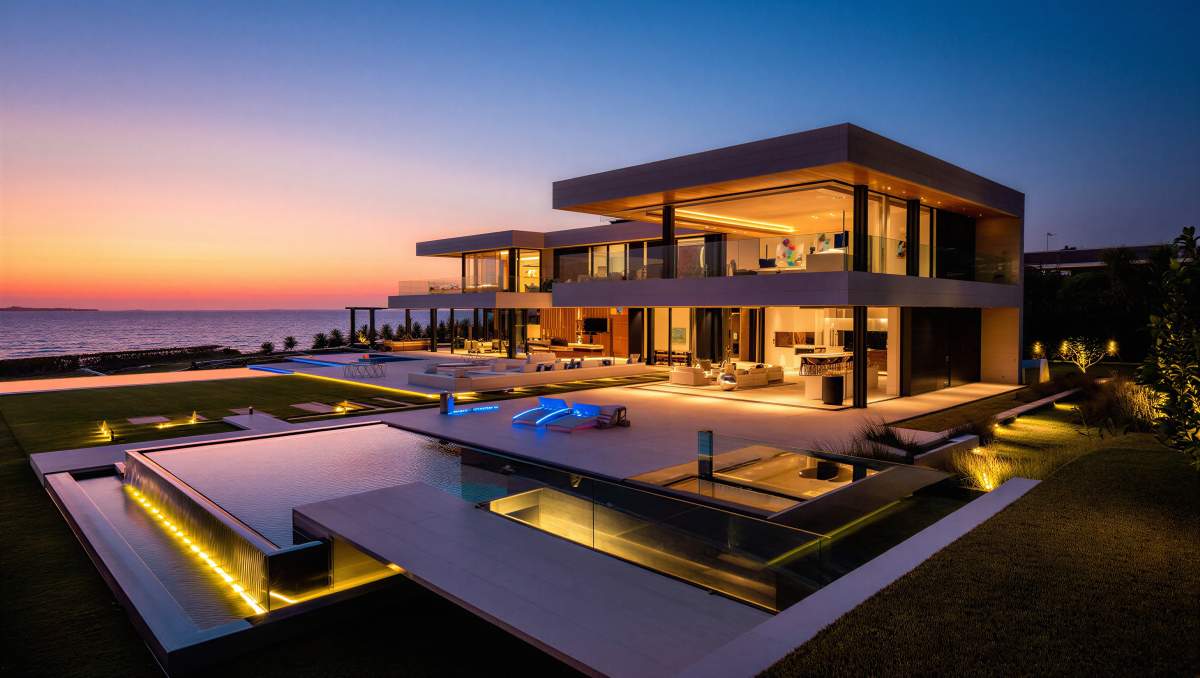
Climate-related expenses can influence value in two opposite ways. A property with resilient construction, updated systems, and documented improvements may be more attractive. A home with uncertain maintenance history or unusually high carrying costs may face a smaller buyer pool.
How can global trade and construction costs affect luxury homes?
Global supply chains influence the price and availability of appliances, stone, windows, mechanical equipment, lighting, furniture, and specialty finishes. Tariffs, shipping disruptions, energy costs, and manufacturing constraints can affect renovation schedules and budgets.
This matters even when a property is not newly built. A buyer evaluating a home may estimate the cost of replacing a kitchen, updating bathrooms, enclosing outdoor space, or improving storm protection. If imported materials are delayed or more expensive, the value of a renovation opportunity changes.
A home with practical, durable improvements may hold broader appeal than one dependent on highly specialized materials or complicated systems. Design quality remains relevant, but long-term serviceability can be just as important.
Does global uncertainty reduce luxury real estate activity?
It can, but uncertainty does not affect every buyer equally. Some households become more cautious and preserve cash. Others seek tangible assets, geographic diversification, or a stable place for family use.
The result is often a more selective market rather than a completely inactive one. Buyers may take longer to review documents, compare carrying costs, and negotiate terms. Sellers may need to recognize that limited inventory does not eliminate the importance of condition, pricing, and transparency.
For local residents, the most useful approach is to separate global headlines from property-specific facts. A changing economic outlook may influence interest rates and buyer confidence, but the practical value of a home still depends on location, condition, resilience, ownership costs, privacy, access, and the quality of available information.
What should buyers and sellers watch most closely?
The most relevant indicators are not always dramatic market headlines. Pay attention to the factors that directly affect affordability and long-term ownership:
- Interest-rate direction and financing terms
- Inflation in construction and maintenance costs
- Insurance availability, premiums, and deductibles
- Currency movements for international buyers
- Financial-market liquidity
- Local inventory and time on market
- Property taxes and community assessments
- Flood, wind, drainage, and storm-resilience characteristics
- The age and condition of major building systems
Luxury real estate is often less sensitive to one economic variable than to the interaction among several. A strong financial market may support demand, while high insurance costs limit budgets. Lower interest rates may improve financing, while a shortage of well-maintained homes keeps prices firm.
For Estero households, understanding those connections provides a clearer view of property value than relying on a single national trend. The strongest analysis considers both the global economy and the very local costs, risks, and lifestyle factors that shape ownership.